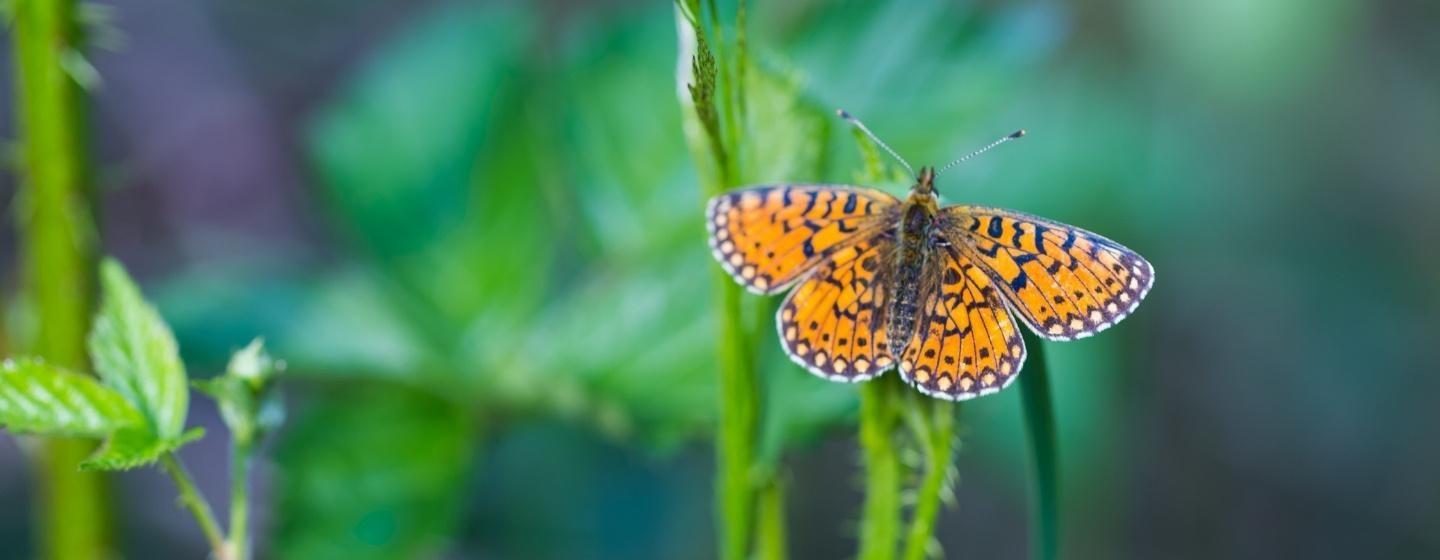
Insect Populations Affected by Climate Change
You would think that a natural area untouched by humans would have all the flora and fauna you normally expect to find.
But a new study from UNC-Chapel Hill in the journal Ecology finds that even in areas relatively undisturbed by human activity, insect populations are declining. Climate change is the likely culprit.
“There’s very little human development in the immediate vicinity or within several kilometers [of the Colorado research site]—and that which is several kilometers away is very minimal,” Keith Sockman, the author of the study and a biology professor at UNC-Chapel Hill, told NPR. “So it doesn’t seem likely that there’s any direct impact on land or water use changes caused by humans that could account for this [population decline].”
Researchers calculated the density of flying insects during 15 summers between 2004 and 2024 in a remote mountain meadow in Colorado. The team set traps and collected all kinds of insects, mostly winged species, from flies and mosquitoes to butterflies and grasshoppers. Sockman found that the insect population declined by an average 6.6% annually. That’s a total drop of 72.4% over the 20-year period.
Sockman said his study showed “a significant decline in these insects in an area that is not very much impacted at all. It’s quite remote, quite pristine, and yet still showing this substantial decline in insects.”
Weather station adds to the data
Adding to the data from Sockman and his team was the information collected by a National Oceanic and Atmospheric Administration weather station located near the research site. The weather station had been gathering data for the past 40 years. That long period of historical data provided Sockman with a way to check his own findings.
The researchers found that the hotter summers, as recorded by the weather station at the sampling site, were associated with fewer insects the following year. That’s right: there was basically one season of lag time between temperatures during summer months and their impact one year later. That led Sockman to believe that warming summers were the strongest factor in the dramatic decline in the numbers of insects.
“That doesn’t leave a lot of other options other than changing climate to explain this,” said Sockman.
Insects matter to everyone
These results are important because until now, most studies on declining insect populations focused on ecosystems that had experienced a variety of human activity. This study shows declines can still happen in more natural areas, which indicates climate change as a likely driving factor.
“Insects have a unique, if inauspicious position in the biodiversity crisis due to the ecological services, such as nutrient cycling and pollination, they provide and to their vulnerability to environmental change,” Sockman told SciTechDaily. “Insects are necessary for terrestrial and freshwater ecosystems to function.”
The findings are concerning because if the drop in insect populations continues, the global food chain could be affected. Not only are insects important for pollinating food crops, but their loss would affect the basic food chain, from small creatures that feed on bugs, like birds and frogs and other amphibians, all the way up to bigger animals and eventually humans. That’s why research like Sockman’s plays a vital role in illustrating the impact of climate change.